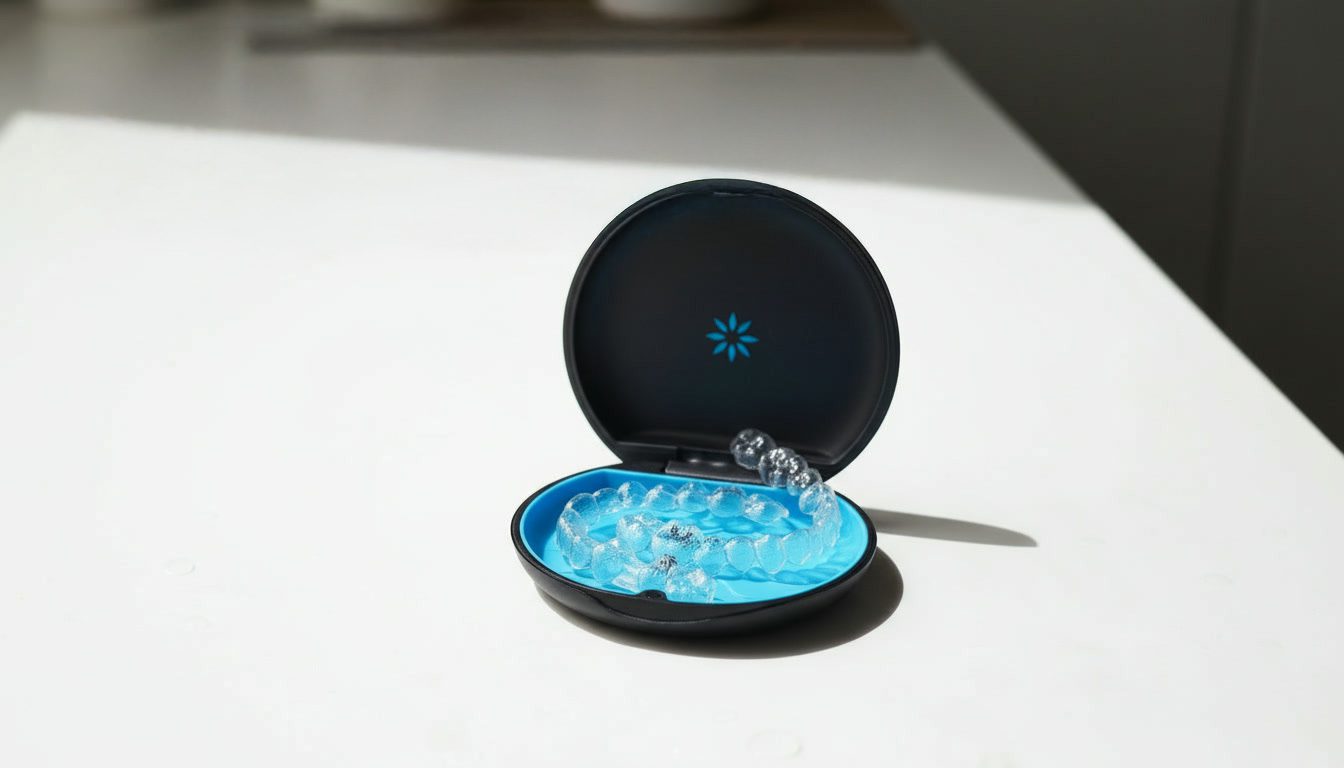
A straightforward adult case with steady 20 to 22 hours of daily wear is often in the six to twelve month range, and a severe bite or missed hours is the one to two year end. The average across all cases runs 12 to 16 months. Some patients finish in as little as six months, and more severe cases take one to two years.
How Many Hours A Day Do The Trays Need To Stay In?
Twenty to 22 hours is the daily minimum, and a child should wear them at least 22 hours each day. That window covers meals, brushing, and flossing, with very little margin left over for anything else. The Invisalign older adult page from the manufacturer sets the same 22 hour standard, so the number is consistent whether you read it from the practice or from the company that makes the aligners. A tray that feels snug at breakfast can feel loose by dinner when it sat out through a long lunch and an afternoon snack. That looseness is the first sign the teeth are not getting the pressure they need for the current stage of movement. Morning tightness is the flip side. When the trays go back in after breakfast, the first few minutes of pressure are the teeth settling back to where the tray wants them, and that tightness fades through the morning as the teeth comply. The pattern returns with the next tray two weeks later, and it tells you the aligners are working. Aligners are switched every two weeks, and each tray is shaped for the next increment of correction. Teeth will not track to that next stage if the previous tray did not get its full hours, and the gap between where the teeth are and where the next tray expects them grows wider with every missed session. I tell patients to think of the 22 hours as a daily budget, not a target to aim for, because the two week cycle depends on it. Invisalign treatment only moves as fast as the wear is honest.
What Makes Invisalign Take Longer?
Missed hours are the biggest factor, followed by the severity of the bite and whether other dental work is already in place. The average treatment time runs 12 to 16 months in this practice. Most adults can anticipate completing treatment in six to twelve months. The manufacturer places its average at 12 to 18 months and notes that adults may take longer when other dental work is already in place, such as crowns, bridges, or implants that change the path a tooth can travel. Both sets of numbers are real, and the gap comes down to case complexity and how consistently the hours are tracked. I see the full range, from the patient who finishes in six months to the one who needs two years, and the difference is almost always hours and complexity. We watch timelines stretch when wear is inconsistent, because the teeth lose ground between trays and the next tray starts from the wrong position. For a patient in Thornton wondering how long Invisalign takes, the range depends on how many hours the trays are actually seated and how much movement the bite requires. A severe case takes one to two years, and that timeline reflects the amount of correction the bite needs. Teeth can be straightened at any age, and the timeline adjusts to what the mouth needs at that age. Week one of a new tray is when you feel the shift, and that steady pressure is what keeps the timeline on track. How long does Invisalign take when those hours slip is longer than the original plan, by about the time the trays sat out.
How Often Do You Come In During Treatment?
The F.A.S.T. system requires in-person appointments every 12 weeks, which is fewer visits than braces patients expect. The iTero scanner takes thousands of images and builds a digital model, then a projection of the finish so you can see the endpoint before the first tray goes in. Invisalign recognizes Dr. Nelson as a Diamond Plus provider, one of the Top 1 percent in the world. He founded the practice in 1992 and is board certified. According to what makes us different, Invisalign cases finish about twice as fast as braces treatments in this practice, with about 90 percent less time in the office. Patients visit about five or six times for Invisalign, compared to the monthly adjustment cycle that fixed appliances demand. A click in the scan confirms the trays are tracking on schedule, and that confirmation is what allows the 12 week intervals to work safely. We use each appointment to confirm progress rather than to drive it, and the scanner does the checking. Every 12 week visit is a checkpoint. The scanner reads where the teeth are and confirms the next set of trays will fit. If the tracking is on schedule, the plan continues. If the teeth have fallen behind, the scan shows it before it becomes a bigger problem. The visit cadence runs around the two week tray cycle plus a buffer for the teeth to settle into each new position before the next check.
When Are Braces Still The Better Call?
Fixed braces can be the better choice when the bite needs rotation, significant vertical correction, or movement that aligners alone cannot deliver. The question is not which option is faster on paper but which tool matches the problem in front of you. When the correction is too complex for trays, a fixed appliance does the work directly rather than asking plastic to solve something it was not designed for. Some bites need a level of control that aligners cannot sustain, and in those cases a fixed wire delivers the correction more predictably. A pause in the aligner sequence belongs in the plan when the teeth need time to settle, and knowing when to pause is part of reading the scan correctly. I look at the scan and the bite together, and when the trays cannot deliver what the case needs, the honest recommendation is a fixed appliance. You can meet Dr. Nelson before the first tray goes in, and the projection from the scan shows which tool fits the case before any treatment starts.
- A short case with consistent 20 to 22 hour wear can finish in six to twelve months, while a severe bite or irregular wear pushes the timeline to one to two years, and the difference between those outcomes comes down to hours and complexity.
- The dividing line is case complexity and wear discipline, because teeth move at a rate set by biology, and aligners only apply force when they are seated in the mouth.
- When a case needs correction that trays cannot deliver, fixed braces carry less risk than forcing aligners beyond what they were designed to do.
Questions Parents Ask Us
Will missing hours add months to treatment?
Missing hours is the most common reason a timeline stretches. Each tray is shaped for a specific stage of movement, and if the teeth do not get enough time in that tray, they will not reach the position the next tray expects. The trays still switch every two weeks, but the tracking falls behind. The scan at the next visit shows whether the teeth are keeping up. We do not add a blanket number of weeks for missed time, because every mouth responds differently and the scanner gives the real answer.
Do adults take longer than teens?
Adults do not take longer simply because they are adults. The factor that extends an adult timeline is other dental work already in place, such as crowns, bridges, or implants that change how the teeth can move. A teen with a full set of healthy teeth and no prior restorations may move through treatment quickly. The timeline reflects the condition of the mouth, not the year on the birth certificate.
What if a tray does not fit at the change?
Stop and call so the office can scan the teeth and see what is happening. A tray that will not seat usually means the previous tray did not get enough wear time, or the teeth are tracking differently than the projection expected. Switching to a tray that does not fit can push a tooth in the wrong direction. The scan shows the problem, and the plan gets adjusted from there.
Do you still need a retainer after the last tray?
The last tray is not the retainer. Teeth have a memory, and without a retainer they will drift back toward their original positions. The doctor fits the retainer at the end of treatment, and that retainer holds the result. How long the retainer is worn is a decision the doctor makes based on the individual case, not a standard schedule that applies to everyone.
For a patient coming from Arvada, the iTero scan at the first visit maps the teeth and projects where they will end up. That projection is the starting point. The work between the first tray and that endpoint is what the timeline measures, and the hours you put in each day are what move the teeth toward it.