
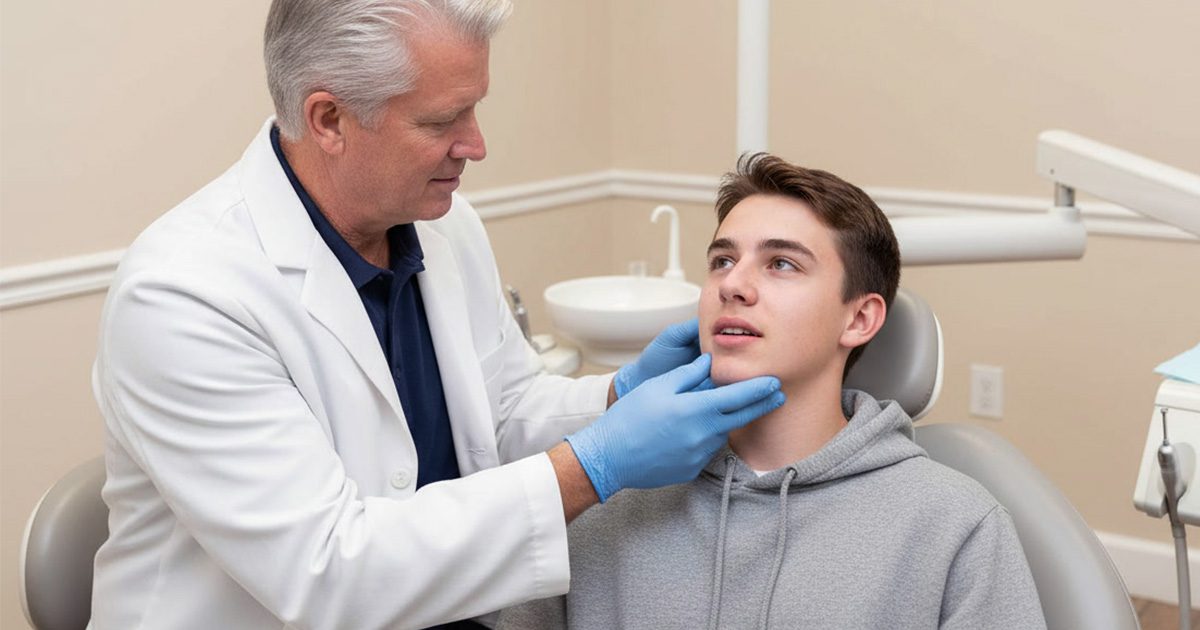
Yes. An orthodontist can evaluate TMJ, and that exam is often the fastest way to know whether your bite is part of the load. If you have been waking up sore, or you hesitate to yawn at dinner, the first look is the joint, the muscles, and how your teeth meet. If the joint is inflamed or locking, we settle it before any teeth move. That visit is available in Thornton, Arvada, Brighton, or Broomfield.
If you want the service overview first, the TMJ notes live on our other treatments page.
Does Invisalign Help Jaw Pain?
Sometimes the morning tightness eases once the teeth stop slamming the joint on every chew. The useful test is whether the joint is ready to move.
Morning tightness that fades after coffee is often tired muscle from clenching overnight. Pain that builds with a sandwich or a long phone call is often load on the joint while you chew or hold your head. A click that used to be quiet and is now a catch is the disc asking for a pause. Naming which one you have changes the plan.
A deep bite that hits first on one side, or back teeth that meet like a wedge, can keep the disc working off-center all day. Clear aligners hold the teeth on a planned path. When that path takes load off a joint that has been working that way, people often wake up less sore, and breakfast stops being the worst part of the morning. When it asks a sore disc to move before it is ready, the click gets louder and opening gets smaller.
Ready usually looks like this: you can open without a lock, swelling is down, and tenderness in front of the ear is quieter than it was a week ago. Not ready looks like a jaw that catches, a morning that is more sore after a new tray, or an opening that is getting smaller. If the jaw is locking or swollen, trays wait until it calms down.
The first two weeks of trays show how the joint is responding. Less soreness at breakfast is a good sign. A new catch, a smaller opening, or pain in front of the ear that is climbing are reasons to stop and look again before the next tray.
When teeth do move, aligner fit still gets checked at every change. That habit is the FAST System in this office, Few Appointments Straight Teeth, which keeps extra visits down once the joint is healthy enough to treat. Average Invisalign timing here is about 10 months and 9 appointments. If the jaw is still sore, treatment adds time at the start so the sequence does not fight the joint. That extra time belongs in week one, while the plan can still change.
Will Moving My Teeth Make TMJ Worse?
It can, if an inflamed joint gets ignored. Treatment pauses when opening drops, when a click turns into a lock, or when you wake up more sore after a new tray instead of less. Those pauses protect the joint so later movement has a chance to help.
The National Institute of Dental and Craniofacial Research describes TMDs as pain and dysfunction in the jaw joint and the muscles that move it. Their public guidance is to start with simple, reversible care: softer foods, heat or cold, gentle exercises, short-term anti-inflammatories. Softer here means cutting steak smaller, skipping the giant sandwich you have to unhinge for, and giving gum a rest. Heat belongs on tired muscle. Ice belongs on a swollen joint. That order comes first here. When the joint is inflamed, orthodontics waits.
Grinding the teeth down to make them meet is a shortcut this office does not take. Enamel does not grow back, and a lower bite is hard to undo if the joint was never the problem you thought it was. Reversible care first leaves you options.
In the chair, the next step usually falls into one of these.
(1) Joint sore, locking, or swollen: calm it first with a softer diet, ice or heat, and a short rest from wide opening. A full Invisalign series does not start that day. Most people feel some relief within days once the joint is not being asked to perform.
(2) Bite loading one side after the joint settles: plan tooth movement, often with Invisalign, and watch the joint at each fit check. Pain relief on an early tray is a good sign for that case.
(3) Mostly muscle, stress, or clenching with a decent bite: protect the joint. Habit work, sometimes a simple appliance. Teeth do not get ground down as a shortcut. Muscle pain is workable, and that is good news because the joint itself can still do its job.
(4) History that belongs with another specialist: that gets named, and you get help getting there. An existing scan is useful, and the joint still gets checked before teeth keep moving. Physical therapy and a trusted pain clinic sit alongside this exam. They are teammates.
Should I See A TMJ Specialist Or Start With An Orthodontist?
Start with someone who will look at teeth, muscles, and the joint in the same visit. I have been treating bites at Trinity since 1992, and the part I still like is watching someone leave with a clear next step instead of a stack of maybes. A TMJ-only clinic that never looks at the bite can miss a load that shows up in two minutes. A dentist who starts trays without watching how you open can miss a lock that should stop treatment.
If you already saw a surgeon or a pain clinic, bring the notes. Those visits still help. The question is whether the bite is still part of the load. The American Association of Orthodontists is clear that bite problems can strain the joint, and that an orthodontist is the specialist who diagnoses that strain. That is the work we do here, and it sits alongside physical therapy or a second opinion you already trust.
What Happens In A TMJ Exam At Trinity?
Walking in with jaw pain is uncomfortable enough. When we sit down, the useful question is how long this has been going on, then how you open and close. A path that jogs left or right, a click on the way open versus the way closed, tenderness in front of the ear versus the masseter. Then how the teeth meet. A deep bite that hits first on one side is a different problem than a joint that clicks with almost even contacts, and naming that difference is the point of the visit.
You do not need to perform for the exam. If opening hurts, say so. If mornings are worse than evenings, that is useful. If you clench on the drive, that is useful too. Tenderness in the masseter often means tired muscle. Tenderness right in front of the ear is more the joint. Both can be true at once, and both get a plan.
A scan happens when the joint can accept it. The iTero maps how the teeth meet so movement can be planned. If the teeth need to move and the joint is quiet enough, we talk Invisalign, including cases other offices would only touch with extractions or jaw surgery. If the joint is still sore, the scan waits so later trays are not asked to move a joint that is still inflamed.
Thornton is our headquarters at 12880 Colorado Blvd., Suite 200. Patients also come in at Arvada, Brighton, and Broomfield. Same exam in each office: calm the joint before teeth move.
Questions Parents Ask Us
Can a teenager have TMJ, or is this only an adult problem?
Teenagers clench for sports, screens, and stress the same way adults do. An exam by age 7 still matters for growth and airway, and the joints get checked then too. A clicking teen does not automatically get Invisalign. A clicking teen whose bite is loading one condyle does get a plan, and you will hear wait versus treat in plain language. Mouthguards for sports protect teeth. They do not replace a bite exam if the jaw is catching at breakfast.
Do I need Botox or surgery for TMJ before I see you?
Usually no. NIDCR puts surgery at the far end of the list. If you already use Botox and it helps the masseter, say so. A tool that is keeping you functional can stay. Aligners still need a calm joint first.
How long before jaw pain calms down?
Muscle soreness can ease in days once the habit that is aggravating it stops. A joint that has been clicking for years will not settle on tray two. Opening, click, and tenderness get re-checked at the fit visits. If those three get worse, movement stops. If they hold steady, treatment keeps going. The timeline lives in your chart, and you will hear it in the room rather than guessing at home.
Will you treat this without a pile of extra appointments?
Once the joint is stable, photo checks and fit monitoring keep extra visits down. When the joint is the question, the chair still matters. Pictures of teeth do not show a lock. Come in for that. Thornton, Arvada, Brighton, or Broomfield, whichever is closer.
If your jaw hurts, start with the exam. You will leave knowing whether the next step is treat, wait, or a referral. If you are unsure, that is enough reason to come in.